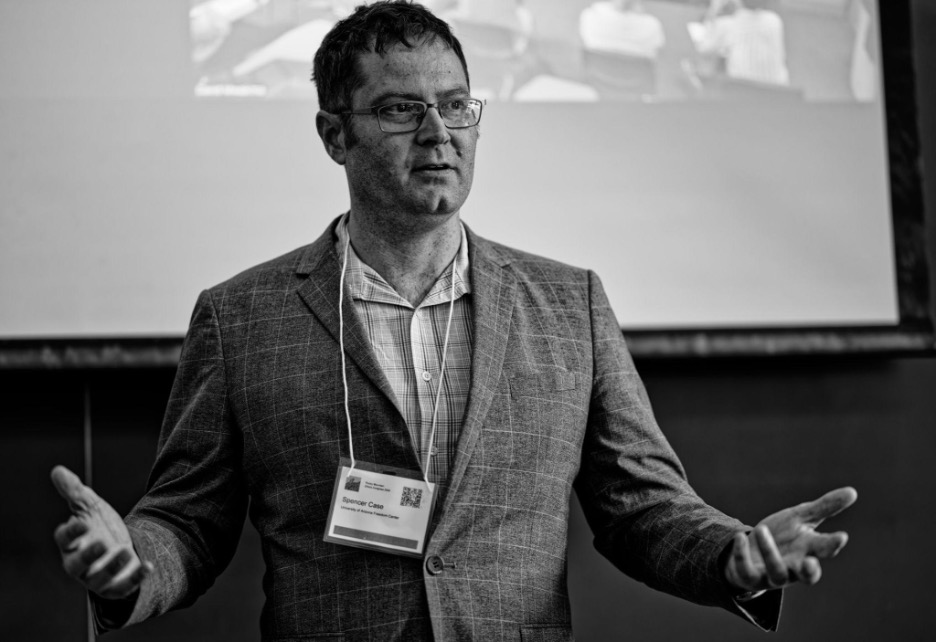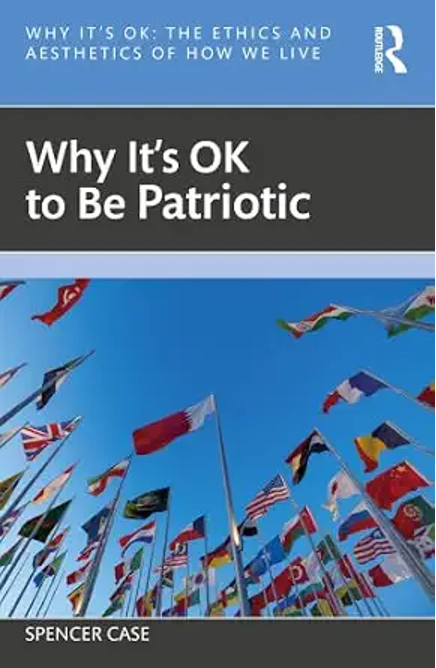
Spencer Case’s new book, Why It’s OK to Be Patriotic, published by Routledge, is now available for pre-order and ships October 17. The book aims to recover an early notion of patriotism that emphasizes transcending careerism and political partisanship for the good of one’s country. Patriotism, so understood, is primarily about expanding the moral circle, not contracting it, as its critics allege. It constitutes a form of love, though, as with every form of love, it can have both virtuous and vicious forms. Case goes on to analyze the nature of national identity and why people find it so compelling.
Here’s the blurb from the Routledge website:
The post-9/11 era saw patriotism transform from somber resolve into jingoistic excess, leaving many to wonder whether love of country inevitably corrupts into tribalism and violence. Critics from Leo Tolstoy to George Kateb have argued that patriotism is inherently dangerous, a relic of a less enlightened age. Yet abandoning patriotism entirely may be worse than the disease.
Why It’s OK to Be Patriotic makes a philosophically rigorous case that patriotism, properly conceived, is neither irrational nor harmful, but essential to democratic life. Case argues that patriotism is best understood as love of country rather than mere loyalty, a love directed toward compatriots as participants in a shared political community. Drawing on Aristotle, contemporary philosophy, and hard-won experience, he defends patriotism as a virtue, a golden mean between tribal excess and cosmopolitan detachment, while articulating the patriotic duties of heart and mind required to maintain the civic commons. He tackles the toughest objections head-on: Does patriotism cause war? Does it rest on irrational bias? Can it be reconciled with universal moral principles?
The book culminates in a powerful meditation on America’s current crisis. With political violence escalating and talk of “national divorce” gaining traction, Case argues that the only way out is through, not escape from politics, but the difficult practice of loving one’s country by learning to love the people in it.
To pre-order the book, click here.
To read philosopher Brad Skow’s discussion, click here.
To hear a podcast episode on the book’s themes with sociology professor Fabio Rojas, click here.