Cheshire Calhoun

Professor of Philosophy, Arizona State University

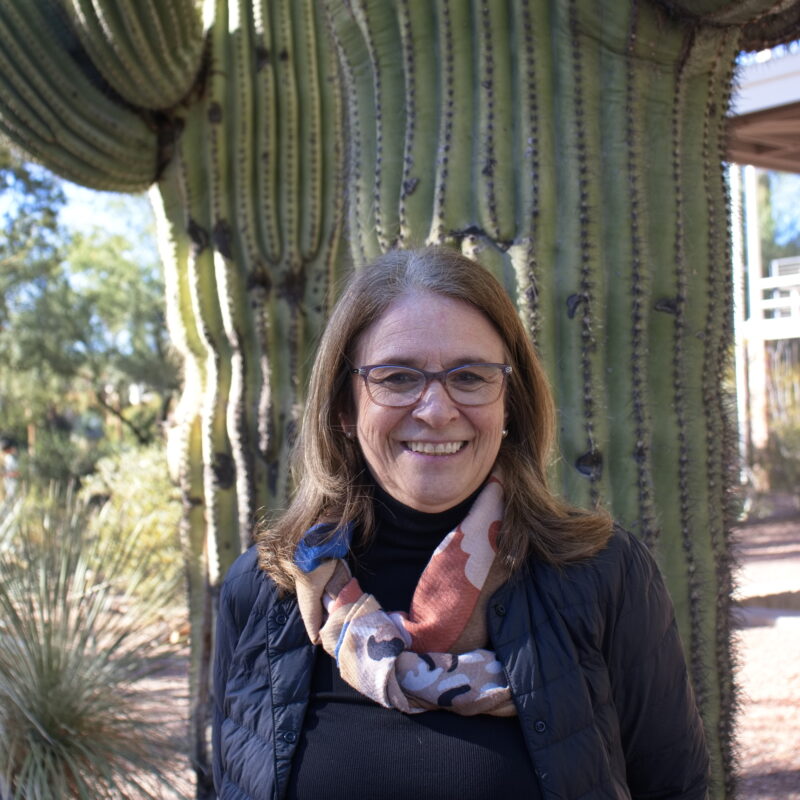
Cheshire Calhoun works in the philosophical subdisciplines of normative ethics, moral psychology, philosophy of emotion, feminist philosophy, and gay and lesbian philosophy. Her most recent books are a collection of previously published essays titled Moral Aims: Essays on the Importance of Getting it Right and Practicing Morality with Others(OUP), and a newer set of essays titled Doing Valuable Time: The Present, the Future, and Meaningful Living (OUP). She is also the author of Feminism, the Family, and the Politics of the Closet (OUP), the editor of Setting the Moral Compass: Essays by Women Philosophers (OUP), and the co-editor with Robert C. Solomon of What is an Emotion: Classic Readings in Philosophical Psychology (OUP). She was elected to the American Academy of Arts & Science in 2020.

Capra_Monica_2024-12-09_019 500x500

C. Monica Capra

Professor of Economic Sciences, Claremont Graduate University

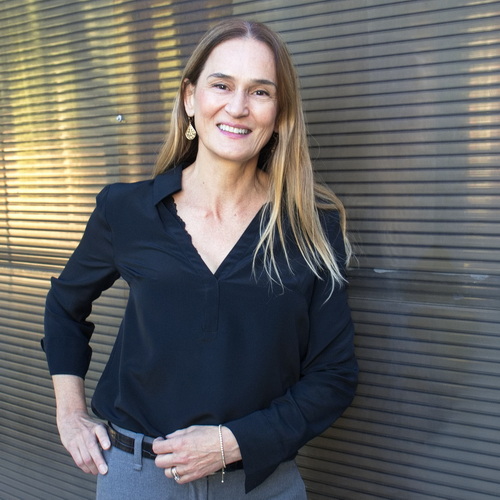
C. Monica Capra is a professor in the Department of Economic Sciences at Claremont Graduate University. Her areas of expertise are experimental economics, behavioral economics, and neuroeconomics. Professor Capra is interested in decision processes. Her contributions in behavioral game theory include the explicit modeling of introspection with error and the study of the effects of mood on decisions. She is also interested in the role personality plays in shaping economic choices. Capra has made transdisciplinary studies an important component of her work, and has collaborated with data scientists, neuroscientists, and psychologists. This collaboration has led to important contributions in behavioral economics. C. Monica Capra is a professor in the Department of Economic Sciences. Her areas of expertise are experimental economics, behavioral economics, and neuroeconomics. Professor Capra is interested in decision processes. Her contributions in behavioral game theory include the explicit modeling of introspection with error and the study of the effects of mood on decisions. She is also interested in the role personality plays in shaping economic choices. Capra has made transdisciplinary studies an important component of her work, and has collaborated with data scientists, neuroscientists, and psychologists. This collaboration has led to important contributions in behavioral economics.


Kai von Fintel

Andrew W. Mellon Professor of Linguistics, Massachusetts Institute of Technology

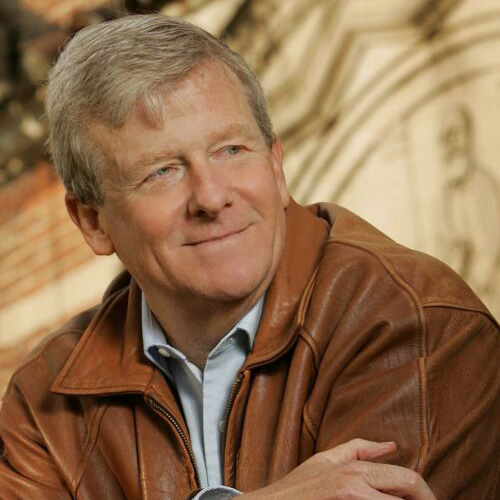
Kai von Fintel serves as the Associate Dean of the School of Humanities, Arts, and Social Sciences at MIT. He received his Ph.D. in 1994 from the University of Massachusetts at Amherst under the supervision of Angelika Kratzer. His research interests are in the intersections of semantics, pragmatics, and philosophy of language.


Jennifer Pate

​Professor of Economics, Loyola Marymount University

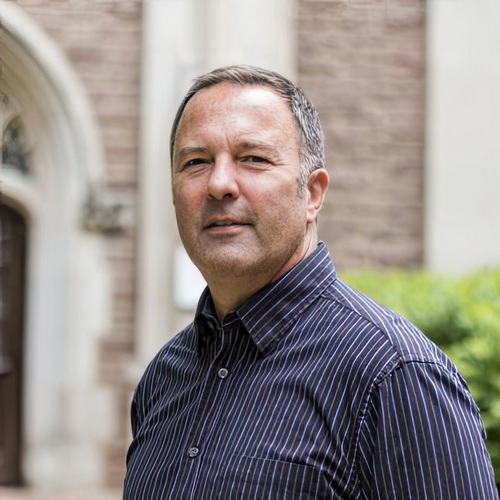
Dr. Pate is a Professor of Economics and Associate Dean of Bellarmine College of Liberal Arts at Loyola Marymount University. Her areas of interest include general economics, industrial organization, experimental and behavioral economics, applied microeconomics, public economics, and economics of giving, altruism, and reciprocity. Working collaboratively with Richard Fox, Professor of Political Science and International Relations., Dr. Pate has conducted significant research on the gender gap in political ambition to help understand and address women’s under-representation in politics. Read their most recent article: (2022) Knowing the Competition: Gender Qualifications, and Willingness to Run in Elections, Political Research Quarterly, Vol. 76, Issue 2.


Laura Razzolini

Laura Razzolini

Professor of Economics and Department Head, University of Alabama

Laura Razzolini is Professor of Economics and Department Head at the University of Alabama. Her research specializes in public and behavioral economics. She conducts economic experiments in a laboratory setting to test predictions of the theoretical models. Her work on altruism, fundraising and cost sharing mechanisms, traffic congestions and terrorism has been funded by the National Science Foundation. Her research has been published in the Journal of Economic Theory, Journal of Public Economics, Economic Theory, Public Choice, and Experimental Economics. For 16 years she served as Editor in chief of the Southern Economic Journal. She currently serve as Vice President of the Southern Economic Association and on the Executive Committee of the Economic Science Association.


Scott Soames

Scott Soames

Distinguished Professor of Philosophy, University of Southern California

Scott Soames specializes in the philosophy of language, the history of analytic philosophy, and the philosophy of law. He has published extensively on truth, reference, meaning, the relationship between semantics and pragmatics, and the nature of syntactic and semantic theories of natural languages. Specific topics of his scholarly interest include names, natural kind terms, descriptions, pronominal anaphora, propositions and propositional attitudes, vagueness, presupposition, partially defined predicates, the so-called rule following paradox, the indeterminacy of translation, and the use of the science and philosophy of language to illuminate the content of legal texts.


Craig Warmke

Associate Professor of Philosophy, Northern Illinois University (NIU),

Dr. Craig Warmke is an Associate Professor of Philosophy at Northern Illinois University (NIU), where he specializes in metaphysics, logic, and the philosophy of computing and information. He earned his Ph.D. in Philosophy from the University of North Carolina at Chapel Hill in 2015.


Kit Wellman

​Professor of Philosophy, Washington University in St. Louis

​Professor Wellman works in ethics, specializing in political and legal philosophy. He serves as chair of the education department and is dean of academic planning for Arts & Sciences.