
Conference on Academic Freedom
September 19 - 20, 2025
Kachina Lounge at the Student Union Memorial Center
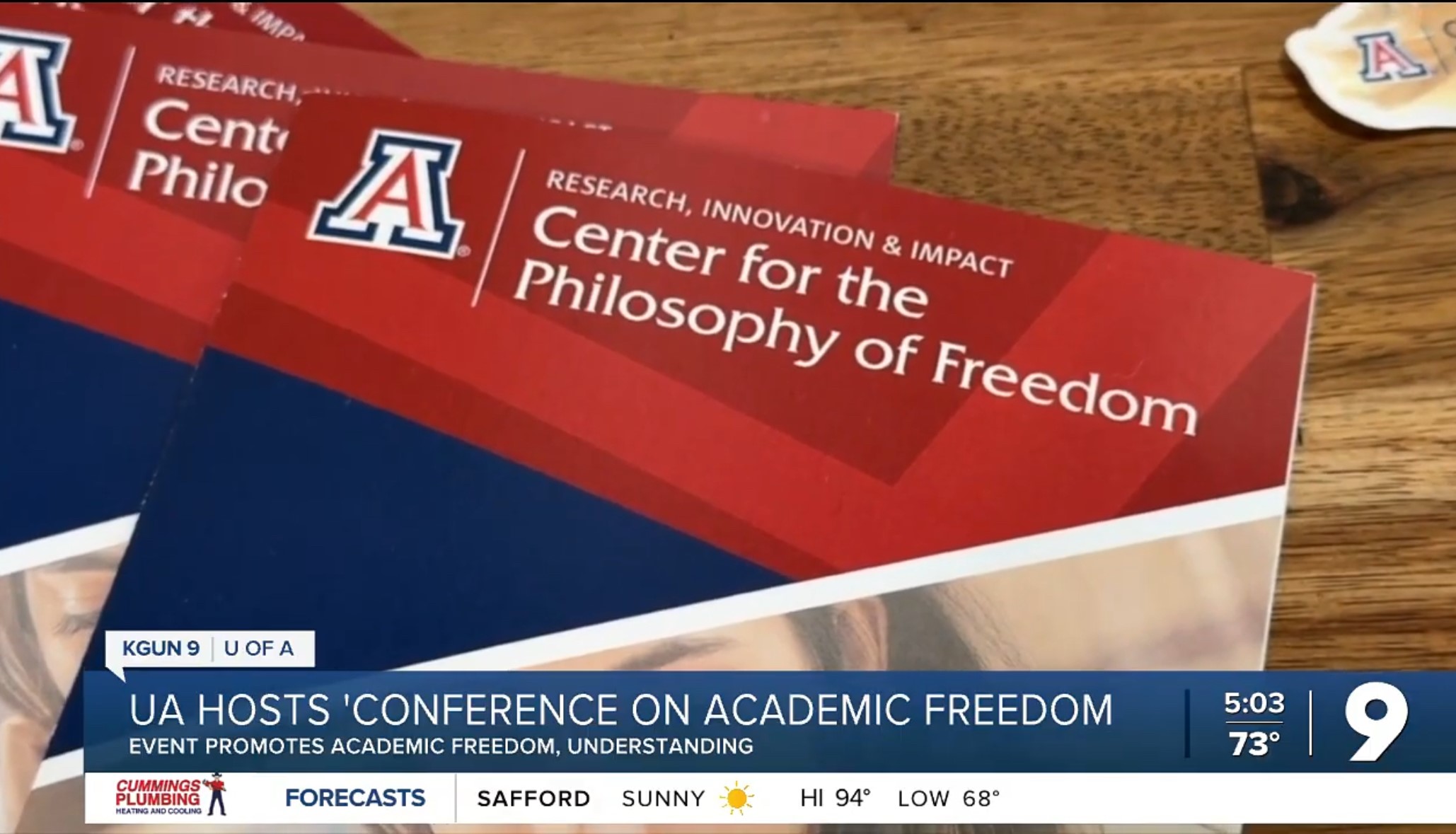
Missed The Event?
Catch up on the conference by watching the livestream recordings. Choose a day on the right to watch the full stream.
The rapidly changing landscape of American higher education presents new challenges for the ideal of academic freedom. The first Annual Conference in Academic Freedom sponsored by the Center for the Philosophy of Freedom brings professors from across the country, with diverse perspectives, to campus to explore questions such as:
-
What is the proper scope of academic freedom?
-
How does academic freedom relate to the democratic ideal of free expression in general?
-
What special responsibilities do public universities have towards their students, faculty, and the broader citizenry?
All talks will be followed by a Q&A to facilitate critical engagement and discussion. Students, faculty, administrators, and the general public are welcome to attend.

Topics of Interest
- Academic Freedom
- Free Speech
- Neutrality of Public Universities
- and More!

Important Dates
- Friday: Sept. 19, 2025 at 3 PM
- Saturday: Sept. 20, 2025 from
9 AM – 3:30 PM

The Venue
Kachina Lounge
Student Union Memorial Center
University of Arizona
1303 E. University Blvd
Tucson, AZ 85719

Organizers
- Dr. Hrishikesh Joshi, Assistant Professor of Philosophy
- Dr. Mary Rigdon, Freedom Center Director and Associate Professor of Political Economy and Moral Science
- Center for the Philosophy of Freedom
Friday, September 19, 2025
3:00 PM - 3:10 PM
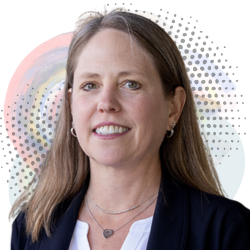
Introduction & Welcome
Mary Rigdon
University of Arizona, Freedom Center
3:10 PM - 5:00 PM

Yes, Even Racism
Jason Brennan
Georgetown University
Introduced by: Kit Wellman, University of Arizona, Freedom Center
Saturday, September 20, 2025
9:00 AM - 9:05 AM
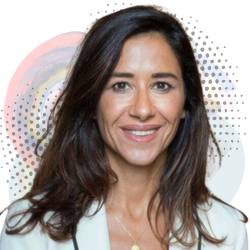
Introductory Remarks
Saura Masconale
University of Arizona, Freedom Center
9:05 AM - 9:15 AM

Academic Integrity and the Role of the State
Jane Bambauer
University of Florida
9:15 AM - 10:00 AM

The Cult of Authenticity as a Barrier to Free Expression
Sam Berstler
Massachusetts Institute of Technology
Introduced by: Sam Mattingly
10:00 AM - 10:15 AM
Break
10:15 AM - 11:00 AM

A Defense of Affirmative Action for Conservatives
Daniel Jacobson
University of Colorado, Boulder
Introduced by: Abbie Livingston
11:00 AM - 11:15 AM
Break
11:15 AM - 12:00 PM

Public Universities and Liberal Neutrality
J.P. Messina
Purdue University
Introduced by: Alexandra Bacall
12:00 PM - 1:30 PM
Lunch on your own
1:30 PM - 2:15 PM

Academic Neurorights: Cognitive Liberty as the Foundation of Academic Freedom
Delaney Verjinski
University of South Alabama
Introduced by: Henry Weiss
2:15 PM - 2:30 PM
Break
2:30 PM - 3:15 PM

Communities of Judgment, Free Expression and Viewpoint Neutrality
Steve Wall
University of Arizona, Freedom Center
Introduced by: George Marshall
3:15 PM - 3:30 PM

Concluding Remarks
Hrishikesh Joshi
University of Arizona, Freedom Center
Jane Bambauer
University of Florida
Professor Jane Bambauer is the Brechner Eminent Scholar at the Levin College of Law and at the College of Journalism and Communications. She teaches Torts, First Amendment, Media Law, Criminal Procedure, and Privacy Law.
Professor Bambauer’s research assesses the social costs and benefits of Big Data, AI, and predictive algorithms. Her work analyzes how the regulation of these new information technologies will affect free speech, privacy, law enforcement, health and safety, competitive markets, and government accountability. Professor Bambauer’s research has been featured in over 20 scholarly publications, including the Stanford Law Review, the Michigan Law Review, the California Law Review, and the Journal of Empirical Legal Studies. Her work has also been featured in media outlets, including the Washington Post, the New York Times, Fox News, and Lawfare, where she is a contributing editor.
Professor Bambauer currently serves as the Chair of the National AI Advisory Committee Subcommittee on Law Enforcement, and she has previously served as the deputy director of the Center for Quantum Networks, a multi-institutional engineering research center funded by the National Science Foundation. She holds a B.S. in Mathematics from Yale College and a J.D. from Yale Law School.
Sam Berstler
Massachusetts Institute of Technology
Dr. Sam Berstler is the Laurance S. Rockefeller Career Development Chair and assistant professor of philosophy at MIT. She studies the structure of everyday interaction. She has a special interest in the role of pretense, ritual, and non-acknowledgment in conversation. Currently, she is finishing the first full-length manuscript devoted to the philosophy of the sociologist Erving Goffman. More generally, she has an ongoing research interest in the connection between contemporary analytic philosophy and the American micro-sociologists of the 1960s-1980s.
Berstler completed her PhD at Yale. Before her appointment at MIT, she was the inaugural Desai Family Postdoctoral Associate at Princeton.
Jason Brennan
Georgetown University
Jason Brennan (G ’07) is the Flanagan Family Professor at Georgetown University. He is the author of 18 books, which have been translated 35 times into 18 languages, plus over 100 academic articles and papers, and many dozens of popular press articles and op-eds. He is the editor-in-chief of *Philosophy and Public Affairs*. In 2025, he was named one of the best business professors by *Poets and Quants*.
Daniel Jacobson
University of Colorado, Boulder
Daniel Jacobson is the Bruce D. Benson Professor of Philosophy at the University of Colorado, Boulder and has held tenured positions at the University of Michigan and Bowling Green State University. He works in ethics, moral psychology, political philosophy, aesthetics, freedom of speech, and the moral and political philosophy of John Stuart Mill. Jacobson’s coauthored book (with Justin D’Arms), Rational Sentimentalism, was recently published by Oxford University Press. He is currently working on a book project titled, Mill’s Reconciliation of Liberty and Utility.
Hrishikesh Joshi
University of Arizona
Hrishikesh Joshi is an Assistant Professor in the UArizona Department of Philosophy and Faculty at the UArizona Center for the Philosophy of Freedom.
Previously, he worked at Bowling Green State University, and before that was a Postdoctoral Research Fellow at the University of Michigan, Ann Arbor. Hrishikesh’s research focuses on normative issues at the intersection of philosophy, politics, and economics (PPE). He also works on meta-ethics and ethical theory.
Hrishikesh completed his Ph.D. at Princeton under the supervision of Gideon Rosen, Michael Smith, and Philip Pettit. He grew up in India and St. Kitts & Nevis, a small Caribbean country. Apart from “philosophizing,” he enjoys keeping fish tanks and playing Go.
Saura Masconale
University of Arizona
Saura Masconale is Associate Director at the University of Arizona Center for the Philosophy of Freedom, Assistant Professor in the Department of Political Economy and Moral Science, and Affiliated Faculty in the James E. Rogers College of Law. At the Freedom Center, she is also in charge of the Master of Legal Studies, Law & Economics concentration, which the Center cosponsors with the James E. Rogers College of Law. Saura was also competitively selected for the University of Arizona Academic Leadership Institute in 2021-22.
Her research studies how the intersection of legal entitlements, politics, and economic forces affect society, both as a positive and normative matter. In particular, her scholarship to date has focused on exploring the implications of this intersection in the public corporation context. Saura’s articles have appeared in the Northwestern Law Review, the Texas Law Review, the Washington University Law Review, the Journal of Corporate Law, and Social Philosophy and Policy, among other outlets. Her most recent work examines the evolution of the corporation from a mere economic agent to a new political actor and explores the democratic and political implications of this transformation.
Saura holds a doctoral degree in law and economics from LUISS Guido Carli University (Rome) and a J.D. from University of Bologna. Prior to joining the Freedom Center, she taught at the University of Chicago Law School and the University of Notre Dame Law School. Before entering into academia, she practiced law at Clifford Chance LLC, an international law firm headquartered in London.
J.P. Messina
Purdue University
JP Messina is an associate professor in the Department of Philosophy. He offers courses in moral and political philosophy, the ethics of data science, and the history of practical philosophy. In addition to teaching responsibilities in the philosophy department, Messina teaches in the college’s Cornerstone Program. Before joining the faculty at Purdue, he held research positions at the University of New Orleans and Wellesley College. He received his Ph.D. from UC San Diego in 2018. His work has appeared in several scholarly venues, including Philosophers’ Imprint, the Canadian Journal of Philosophy, the Philosophical Quarterly, Politics, Philosophy, and Economics, Kantian Review, and the British Journal for the History of Philosophy. His first book, Private Censorship, just published with Oxford University Press, is available at major booksellers.
Mary Rigdon
University of Arizona
Mary Rigdon, Director of the Freedom Center and Associate Professor in the Department of Political Economy and Moral Science at the University of Arizona, is a nationally recognized expert on gender equity. Her recent work focuses on understanding gender differences in competitiveness and the role this plays in the persistent gender wage gap. Mary’s work is supported by the National Science Foundation and has been published in top scientific journals, including the Proceedings of the National Academy of Sciences, Phil Trans B, and Evolution and Human Behavior. Her research has been covered by local, national, and international media, including interviews with the U of A News, a special feature in the Financial Post, KJZZ’s The Show (Phx, AZ), and KVOA Channel 4 News (Tucson, AZ). Mary has presented this research in the National Science Foundation’s Social, Behavioral, and Economic Sciences Distinguished Lecture Series, and she was competitively selected to present her research at the 2023 SXSW U of A Wonder House.
Delaney Verjinski
University of South Alabama
Delaney Verjinski works in moral and political philosophy. Her primary research is on political emotions, focused on understanding their role in our moral psychology and on the ethics of how we navigate emotion in civic life. She is also interested in ethics, PPE (philosophy, politics, & economics), and public philosophy.
Professor Verjinski received her Ph.D. and M.A. in Philosophy from the University of North Carolina in Chapel Hill. She held a pre-doctoral fellowship at Duke University with the Civil Discourse Project. She received her A.B. in Philosophy from Princeton University.
Steve Wall
University of Arizona
Steven Wall is a Professor of Philosophy at the University of Arizona, a member of the Center for the Philosophy of Freedom, and a member of the Politics, Philosophy, Economics, and Law Program. He joined the Arizona department in 2010. Before coming to Arizona, Dr. Wall taught at the University of Connecticut, Bowling Green State University, and Kansas State University. He received his B.A. from Duke University, an M.A. from Columbia University, and his D. Phil. from Oxford University. He specializes in political philosophy, and with David Sobel and Peter Vallentyne, edits Oxford Studies in Political Philosophy.
Jane Bambauer
Academic Integrity and the Role of the State
This essay contends that academic freedom, though indispensable, is not a sufficient guardian of the university’s higher calling: academic integrity. In recent political clashes over higher education—from President Trump’s actions against Harvard to Florida’s “STOP WOKE” Act—universities have invoked the shield of academic freedom. But this essay challenges the assumption that all external intervention is illegitimate. Academic freedom is meant to resist external threats to integrity, but it was never designed to address internal threats arising from within the academy itself. Indeed, internal orthodoxies can flourish when academic freedom is misapplied.
Grounded in a normative vision of the university as a truth-seeking institution, this essay proposes a philosophical and constitutional framework in which the state may intervene—cautiously, and without imposing its own dogma—to restore pluralism, competence, and public trust. The goal is not to defend political interference, but to articulate the conditions under which external oversight can be justified to preserve the university’s foundational mission.
Sam Berstler
The Cult of Authenticity as a Barrier to Free Expression
What kinds of practices promote a culture of free expression? I argue for a seemingly paradoxical result. If we want to promote the flourishing of free expression, we should extensively engage in “phony” or “empty” forms of talk. More specifically, we should make extensive use of ritualistic speech. Ritualistic speech is not insincere. It is just non-sincere. Through ritual speech, we build trust, protect our basic social standing, and preserve our relationship. Our ritualistic practices are in decay and, because of that, so is the free and open exchange of ideas. I trace this decay to a cultural mistake. On both the left and the right, we conflate a “free and open” conversation with an “authentic” one. I show how we can and why we should resist this move.
Jason Brennan
Yes, Even Racism
What are the proper limits of free speech in academia? Many people insist that, at the very least, racist speech and research should be banned. In this talk, I argue the opposite: even racism should be tolerated—not because racism is good or might be true, but because no one can be trusted to decide what counts as “racist” and therefore prohibited. Students, administrators, and faculty already abuse the authority and resources they have, and we should expect them to abuse any greater power to police ideas.
Daniel Jacobson
A Defense of Affirmative Action for Conservatives
Attempts to mitigate the stark underrepresentation of conservative, and even classically liberal, perspectives in academia are often scoffed at as favoring “affirmative action for conservatives.” This response is treated as a knockdown objection even by defenders of traditional affirmative action, both because it is assumed that conservatives are already privileged and that they can only defend affirmative action hypocritically and selfishly. Yet I argue that the proposed policy is neither absurd nor hypocritical, and is much easier to defend than its antagonists suppose.
J.P. Messina
Public Universities and Liberal Neutrality
Why, if at all, should the state fund higher education and academic research? In this talk, I argue that there are good public-goods oriented reasons supporting state funding that satisfy an important conception of liberal neutrality. Importantly, such justifications also generate a requirement that universities operate autonomously from state directives and that they govern themselves by a certain set of norms. This framework, I argue, is well-positioned to explain both criticisms of the university for the right, and also why many legislative proposals for reform are wrong-headed.
Delaney Verjinski
Academic Neurorights: Cognitive Liberty as the Foundation of Academic Freedom
This paper proposes the concept of academic neurorights: a new framework for protecting cognitive liberty within institutions of research and higher education. Just as academic freedom expresses the broader right to freedom of thought through protections for expression, I argue that academic neurorights are the institutional expression of our more general rights to cognitive liberty. This includes the right to mental privacy, autonomy over one’s own thought processes, and protection from cognitive surveillance or coercion.
As neurotechnologies capable of detecting, monitoring, and even influencing mental states potentially move into educational and research settings, the ability to think freely and privately is under threat. I draw on the work of Nita Farahany and others who advocate for cognitive liberty. I examine how emerging neurotechnologies challenge not only individual liberty but the epistemic and ethical foundations of academic life. Thought must be free—not just speech—for genuine inquiry, dissent, and intellectual risk-taking to occur.
