

Parents take daily risks related to the well-being of a child. Sometimes a risk may be taken to secure long-term potentially positive outcomes, but in the process of making that choice you’re facing a risk—say, loss of income due to the cost of the treatment—how likely are you to take that risk and make the investment? This becomes especially true if the positive outcome is not guaranteed. These are questions being asked by Mary Rigdon, Director of the Center for the Philosophy of Freedom at the University of Arizona and associate professor of political economy and moral science at the University of Arizona, in her latest publication appearing in The Handbook of Experimental Development Economics, published by Edward Elgar Publishing.
“Our goal is to help bridge the gap between experimental methods and the decisions people face every day. If we are to design effective and impactful economic policies, it is essential that we understand how individuals in developing countries perceive and respond to risk.”
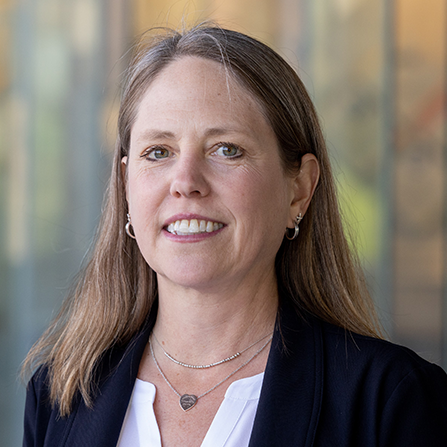
Dr. Mary Rigdon, Freedom Center Director and Associate Professor of Political Economy and Moral Science
Rigdon and her co-authors Farah Said, assistant professor of economics at Lahore University of Management Sciences, and Joe Vecci, associate professor of economics at University of Gothenburg, provide a comprehensive review of how risk influences economic behavior in vulnerable populations. The chapter titled “An Overview of Risk Preferences in Developing Countries” is a chapter included in the new book that explores the broader topics of established and emerging developments in experimental development economics—in other words, how are people choosing to make economic decisions in developing countries.
Rigdon explains this further saying, “The research we present in the Handbook of Experimental Development Economics showcases the latest insights into risk preferences in developing countries. Not only are choices to take risks context-dependent but also deeply influenced by individual lived experiences, often perpetuating generational poverty, in an attempt to avoid negative outcomes.”
 The chapter engages with experimental and empirical research to explore how individuals in developing countries assess and respond to risk—especially in sectors such as agriculture, education, and health. These preferences are often shaped by repeated exposure to economic shocks and instability and are critical in understanding behaviors that perpetuate cycles of poverty. The chapter also critically examines methods for measuring risk preferences in low-resource settings, offering insights into practical limitations and proposing directions for future research.
“Our goal is to help bridge the gap between experimental methods and the decisions people face every day,” said Dr. Rigdon. “If we are to design effective and impactful economic policies, it is essential that we understand how individuals in developing countries perceive and respond to risk.”
A special thanks to the handbook editors Utteeyo Dasgupta, associate professor of economics at Fordham University, and Pushkar Maitra, professor of economics at Monash University, and to Edward Elgar Publishing for their commitment to supporting rigorous and policy-relevant research.
To learn more about how The Handbook of Experimental Development Economics explores both established and emerging tools in these fields, including methods for measuring social preferences, evaluating training programs, and capturing learning outcomes in developing regions visit the publisher’s website. Information to purchase and cite this work are now available here.
