
The Freedom Center’s core faculty unite a diverse set of expertise across philosophy, economics, politics, law, and the social sciences to examine freedom in all its dimensions. Their research drives our foundational understanding to inspire innovative solutions to complex societal challenges across all platforms and representations of freedom. Together, their work and collaborative initiatives demonstrate how diverse perspectives, even disagreements, and collaborative academic inquiry deepen our understanding of freedom’s role in building just, vibrant communities.
Foundational Research into Freedom
Freedom Through Insight, Progress Through Research
Freedom Center Leadership
Envisioning a Future Where we can all Constructively Disagree
Director Mary Rigdon
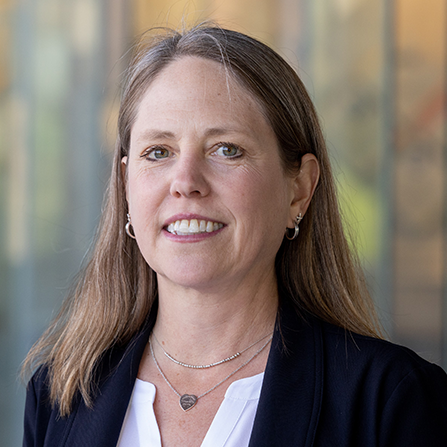
Freedom Center Director and Associate Professor of Political Economy and Moral Science
Mary Rigdon is Director of the Freedom Center and Associate Professor in the Department of Political Economy and Moral Science at the University of Arizona, is a nationally recognized expert on gender equity. Her recent work focuses on understanding gender differences in competitiveness and the role this plays in the persistent gender wage gap. Mary’s work is supported by the National Science Foundation and has been published in top scientific journals, including the Proceedings of the National Academy of Sciences, Phil Trans B, and Evolution and Human Behavior. Her research has been covered by local, national, and international media, including interviews with the U of A News, a special feature in the Financial Post, KJZZ’s The Show (Phx, AZ), and KVOA Channel 4 News (Tucson, AZ). Mary has presented this research in the National Science Foundation’s Social, Behavioral, and Economic Sciences Distinguished Lecture Series, and she was competitively selected to present her research at the 2023 SXSW U of A Wonder House.
Associate Director Saura Masconale
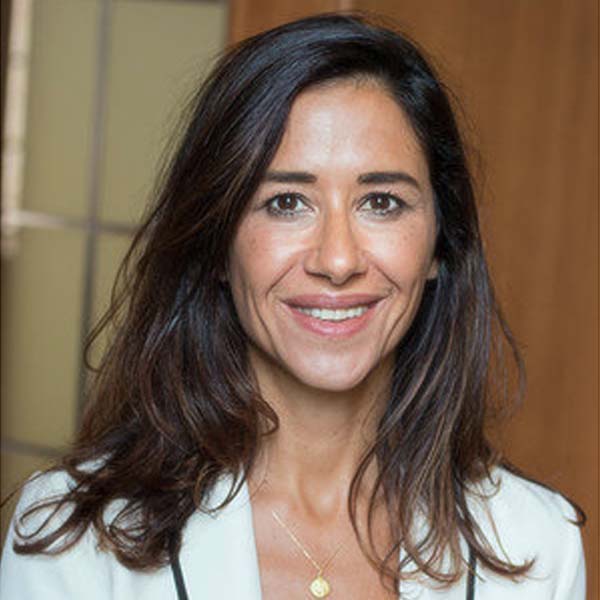
Freedom Center Associate Director, Assistant Professor of Political Economy and Moral Science, James E. Rogers College of Law Affiliated Faculty
Saura Masconale studies corporations as both economic and political actors, exploring how their evolving role reshapes the balance between markets and democracy and reframes our rights and responsibilities as citizens and consumers. Her research examines how corporate governance and institutional design structure the interaction between economic liberty and democratic accountability, advancing a normative framework for understanding the corporation’s place in modern liberal societies.
Founding Director Dave Schmidtz
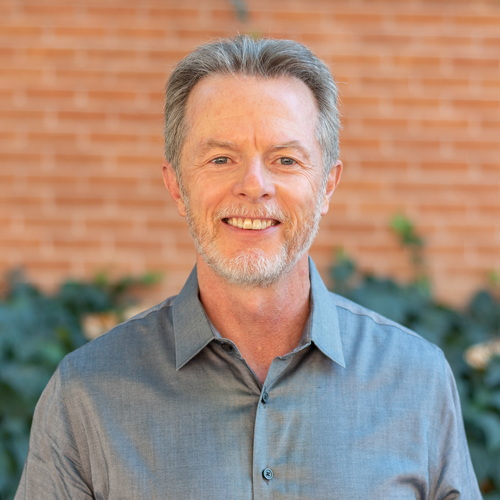
West Virginia University Professor and Presidential Chair of Moral Science and Director of Social Philosophy and Policy Center
David Schmidtz founded the University of Arizona Center for Philosophy of Freedom in 2010 and served as Director until 2023. He remains editor-in-chief of Social Philosophy & Policy. While at the University of Arizona, Dave was Kendrick Professor of Philosophy and Eller Chair of Service-Dominant Logic. He designed, ushered through to approval, and then served as the founding Head of the Department of Political Economy & Moral Science.
Dave is Professor and Presidential Chair of Moral Science, and Director of the Social Philosophy and Policy Center at West Virginia University’s Chambers College of Business and Economics. He aspires to pick up where the Scottish Enlightenment left off, treating Ethics as a subject that begins and ends with observation: specifically, observation of the human condition and of what tends to improve it. Today’s moral theories often focus on questions of what to do, whereas David Hume and Adam Smith were more focused on what works. Their questions were about which principles have a history of demonstrably being organizing principles of actual thriving communities at their best. See Living Together. Read more about Dr. Schmidtz.
Freedom Center Core Faculty
Asking Questions that Pursue Freedom in All its Forms
Assistant Professor of Political Economy & Moral Science
Scott Casleton
Moral & Political Philosophy, Normative Philosophy of Technology
Casleton's Research
Scott Casleton’s research focuses on free speech in the digital age, examining how norms of liberty, equality, and privacy apply to social media platforms, search engines, and internet pornography. His work also investigates the moral foundations of freedom of speech and the relationship of free speech to privacy, equality, and democracy. Casleton is additionally studying the development of value theory in the Early Modern period, with his paper “Grotius Contra Carneades: Natural Law and the Problem of Self-Interest” in the Journal of the History of Philosophy (2025).
In another recent article, “Privacy and Assurance: On the Right to be Forgotten” (Political Philosophy, 2024), he explores how digital technologies reshape our understanding of privacy related to the right to be forgotten within digital search results, and how it can pose a threat to free speech. He is also developing papers on free speech and democracy, social media and sexualized content, subordination, and the value of pornography.
Casleton’s written works are published for both academic and public audiences, and together they bridge historical insight with pressing questions about liberty in the digital world. You can learn more about his publications and research on his website.
Recent Accomplishments
Journal Publications
Casleton, Scott. “Grotius Contra Carneades: Natural Law and the Problem of Self-Interest.” Journal of the History of Philosophy 63 (1): 49-74 (2025)
Casleton, Scott. “Privacy and Assurance: On the Right to be Forgotten.” Political Philosophy 1 (1): 212-235 (2024)
Invited Talks
“Scrolling and Sexualization: On Normalizing Power” University of Arizona Faculty Colloquium, September 2025
“Should Sexualizing Women Be Normal?” PPE Society (Panel on Content Moderation), October 2025 and PhilMod, Online Speaker Series, April 2025
“Moderation in Moderation” Research Colloquium, University of Arizona, April 2025; Research Colloquium, Simon Fraser University, February 2025; Research Colloquium, Hebrew University of Jerusalem, December 2024
“Hobbes’s Reply to the Fool Reconsidered” PHIL Forum, UC Berkeley, September 2024
Commentaries
Comments on Lizzy Holt, “The Ethics of Intercourse,” Berkeley-London Conference, UC Berkeley, May 2025
Comments on Mike Martin’s ”Relishing Fine Strokes: Hume’s ’Of the Standard of Taste,’” Kadish Workshop in Law, Philosophy, and Political Theory, UC Berkeley, October 2024
The Freedom Connection
Casleton studies free speech in the digital age, examining how norms of liberty, equality, and privacy apply to social media, search engines, and online content. His work supports freedom by clarifying how speech can remain a meaningful right in modern democracies while addressing new threats posed by digital technologies.
Assistant Professor of Philosophy
David Clark
Moral, Legal & Political Philosophy
Clark's Research
Professor David J. Clark’s research explores fundamental questions about harm, rights, and justice, with a focus on how our moral rights can be gained, lost, or altered. His research works to discover when it is permissible to harm others in self-defense, how societies should approach punishment, and who should bear the costs when official actions cause unintended harm.
His research is most focused on the ethical foundations of legal and political institutions, including criminal law, policing, war, and other policies. His paper, The Price of Duty, develops a framework for determining when public officials, such as police or judges, should be personally liable for mistakes and when the burdens of those errors should be shared by society as a whole. In the paper, Mistaken Defense and the Unbundling of Rights, he explores a deeper understanding to when apparent attackers lose their rights against defensive harm, and works to refine longstanding debates grounded in the ethics of self-defense.
Clark’s work aims to clarify how we balance individual rights with collective responsibilities, offering academic and research-based guidance to building fairer legal systems and protecting both personal freedoms and public trust in the institutions that govern us.
Recent Accomplishments
Journal Publications
Clark, David J. “Mistaken Defense and the Unbundling of Rights.” Ethics, vol. 135, no. 3, 2025, pp. 428–457.
Clark, David J. “The Price of Duty.” Journal of Moral Philosophy, 2025.
Professional Roles
Organizer for the Arizona Workshop in Normative Ethics
The Freedom Connection
Clark’s research examines how legal and moral systems determine when it is permissible to harm others, assign responsibility, or protect rights. By clarifying the balance between individual rights and collective responsibilities, his work helps ensure that people can exercise their freedoms while maintaining trust in just institutions.
Sherwin Scott Professor of Philosophy
Thony Gillies
Language, Logic, and Legal Philosophy
Gillies' Research
Professor Thony Gillies’ research is based in how people communicate and reason in uncertain and dynamic environments. We all recognize that we live in an imperfect world with imperfect information. We rely on language, inference, and limited context to navigate and direct our decisions throughout the confusion. His work centers on “conditionals” or statements like “if it rains, then the ground is wet,” which lie at the heart of how we express connections between possibilities, make decisions, and coordinate with others. His work draws on formal models from logic and closely relate to writing proof statements you might encounter in logic and mathematics, for example “if (hypothesis) P, then (conclusion) Q”. Applying these concepts to language Gillies investigates the complex ways we use language to suppose, predict, imagine alternatives, and revise beliefs in light of new information.
He is also currently working with legal theorists on how logical tools can help us better interpret rules, exceptions and applications in the law. One example is his ongoing work with Dr. Simone Sepe, Professor of Law at the University of Toronto, and Dr. Alan Schwartz, Sterling Professor Emeritus of Law at Yale Law School, focusing on legal formalism and its view of how judges apply the law. The project is working to demonstrate a version of legal formalism that can make sense of making exceptions and adjustments in the application of the law. Ultimately, Gillies’ research examines and helps explain how we use language to manage uncertainty and apply it in a variety of ways. These considerations into conditionals have important applications for everything from legal reasoning to artificial intelligence, and for understanding the cognitive tools we all rely on to make sense of the world and find our way in it.
Recent Accomplishments
Professional Role
Associate Editor for Semantics & Pragmatics
Presentation
“The Logic of Legal Formalism,” American Law and Economics Association Annual Meetings, May 15, 2025 (co-authored with Alan Schwartz and Simone Sepe)
The Freedom Connection
Gillies explores how humans reason and communicate under uncertainty, particularly through conditionals and logic. His work supports freedom by enabling individuals and societies to make informed, rational decisions and navigate complex legal and social environments effectively.
Associate Research Professor
Lynn A. Jansen
Ethical Decision Making at End-of-Life, Informed Consent & Bioethics
Jansen's Research
Lynn A. Jansen’s research is at the intersection of clinical ethics, research ethics, and bioethics, with a strong focus on informed consent, patient autonomy, and the pursuit of ethical decision-making in medical research. With a background in both political theory and first-hand clinical experience, she explores how patients understand and interpret the risks and goals of their participation in medical research. Her work examines the problem of misconceptions, whereby research participants inaccurately associate experimental treatments with personalized medical care. She also studies unrealistic optimism, a cognitive bias that can undermine a patient’s ability to fully grasp the impacts of trial participation and what benefits, if any, they may experience through participation in a trial, especially a Phase One Trial.
In her recent work, she argues for a reevaluation of beneficence, a medical provider’s obligation to act in a patient’s best medical interest, as a more fundamental ethical priority in clinical contexts than patient autonomy. Her research on informed consent has broad implications for how we design and oversee clinical trials, improve doctor/patient communication, protect research participants and build trust and transparency in our healthcare system. By clarifying what genuine informed consent requires of healthcare professionals and communicates to patients, Jansen’s work aims to safeguard patient rights while supporting ethically sound medical innovation and advancements.
Recent Accomplishments
Professional Roles
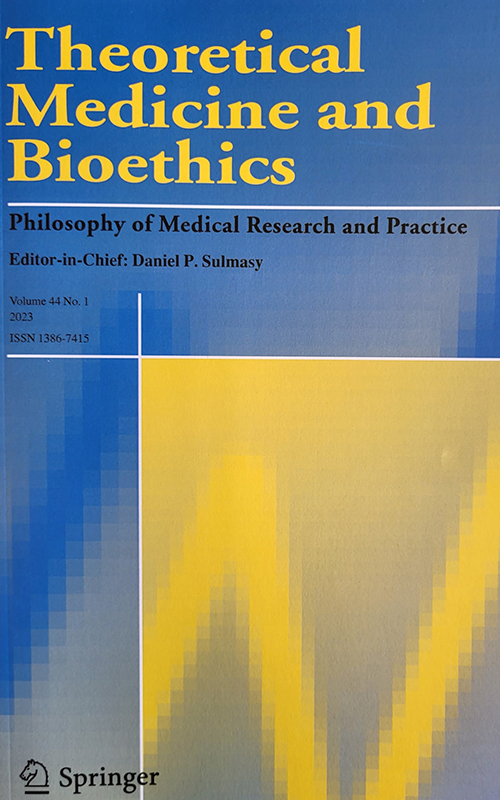
Co-editor of Springer, Theoretical Medicine and Bioethics
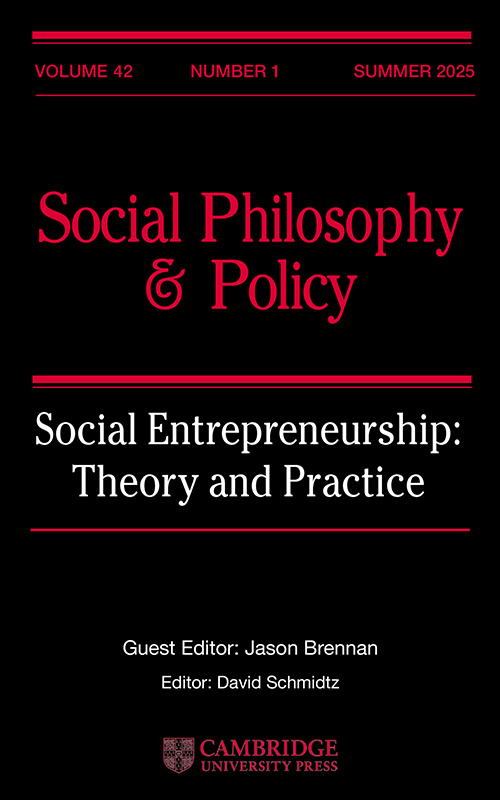
Managing Editor of Cambridge University Press, Social Philosophy and Policy
Journal Publication
Jansen, Lynn A. “Pragmatic Clinical Research, Informed Consent and Clinical Equipoise.” Social Philosophy and Policy, vol. 41, no. 2, 2024, pp. 306–326.
The Freedom Connection
Jansen studies clinical and research ethics, focusing on informed consent, patient autonomy, and ethical decision-making in medical contexts. By ensuring patients understand risks and benefits, her work safeguards the freedom to make knowledgeable and self-directed choices about one’s health.
Assistant Professor of Philosophy
Hrishikesh Joshi
Freedom of Expression, Political Philosophy & Normative Ethics
Joshi's Research
Hrishikesh Joshi’s research explores the normative issues at the intersection of philosophy, politics, and economics (PPE). Through his research he explores how beliefs, anticipated norms, and institutions interact throughout democratic societies, especially divided ones. Joshi’s work focuses on the importance of freedom of expression, both as a legal right, and as a vital condition for growth in knowledge and civic engagement. Joshi argues that robust discourse, even when uncomfortable or controversial, is essential for forming justified beliefs and engaging in meaningful political life and life in general. His current book project, Politics and Public Discourse (under contract from Cambridge University Press), examines the forces driving polarization and partisanship. In particular, he hopes to better understand the negative impacts these divides inspire and how we can work toward closing and healing, to allow for more open and engaged conversations.
Joshi is also an avid mentor for graduate students exploring related and tangential questions. His students are researching questions such as paternalism, risk, and epistemic bubbles surrounding freedom, autonomy and disagreement in today’s world.
With his research Joshi hopes to contribute to a broader understanding of how societies can preserve intellectual openness in the face of social pressures, misinformation, and ideological divides. Through more intentional reflective and open dialogue we can better navigate disagreement and build more resilient democratic communities, inclusive of many different viewpoints and belief-systems.
Recent Accomplishments
Publications
Joshi, Hrishikesh, and Robin McKenna. “The Duty to Listen.” Philosophy and Phenomenological Research, vol. 110, no. 2, 2025, pp. 687–708.
Joshi, Hrishikesh. “Science Communication, Paternalism, and Spillovers.” Canadian Journal of Philosophy, 2025.
Joshi, Hrishikesh. “Zetetic Intransigence and Democratic Participation.” Episteme, 2025.
Joshi, Hrishikesh. “The Censor’s Burden.” Noûs, 2024.
Presentations
“Expertise and Social-Epistemic Warrant,” Consent, Truth, and Power Conference, Jun 2025
Panel Discussion, “Harms-Justified Censorship,” Censorship in the Sciences Conference, Jan 2025
“Science Communication, Paternalism, and Spillovers,” Philosophy Department Colloquium, ASU, Jan 2025
The Freedom Connection
Joshi investigates freedom of expression and the role of norms, beliefs, and institutions in democratic societies. His research highlights how open discourse and inclusive debate are essential for intellectual freedom, civic engagement, and resilient democracies.
Freedom Center Associate Director
Assistant Professor of Political Economy and Moral Science
James E. Rogers College of Law Affiliated Faculty
Assistant Professor of Political Economy and Moral Science
James E. Rogers College of Law Affiliated Faculty
Saura Masconale
Law & Economics, Corporate Governance & Democratic Theory
Masconale's Research
Saura Masconale’s research studies corporations as both economic and political actors, exploring how their evolving role reshapes the balance between markets and democracy and reframes our rights and responsibilities as citizens and consumers.
Public corporations, once viewed just as economic engines and market actors, have become influential participants in political and social life. This transformation raises pressing questions about legitimacy, accountability, and the boundaries of democratic governance. Should corporations have a say on “citizens’ issues” such as abortion, immigration, and racial and gender equality? What legal and moral rights are relevant to answering these questions? What are the risks of allowing corporate power to mingle with our social and political life?
These are among the questions Saura’s work investigates, showing that 21st-century liberal democracies cannot be fully understood without examining their primary engine of wealth: capital markets and public corporations. Her research underscores that our economic and political freedoms are not fixed entitlements but living constructs—constantly negotiated and reshaped by the evolving relationship between democratic institutions and corporate power.
At its core, Saura Masconale’s research examines corporations as both economic and political actors, exploring how their evolving role reshapes the balance between markets and democracy and reframes our rights and responsibilities as citizens and consumers.
Public corporations—once seen primarily as drivers of economic growth—have become influential participants in political and social life. This transformation raises urgent questions about legitimacy, accountability, and the limits of democratic governance. Should corporations take positions on issues such as abortion, immigration, or racial and gender equality? What legal and moral principles determine whether such engagement is appropriate? And what risks arise when corporate power extends into civic and political life?
Saura’s work investigates these and other questions, arguing that that our collective life in modern democracies cannot be fully understood without examining the institutions at their economic core: capital markets and public corporations. Her research highlights that the relationship between corporate governance and democratic governance is not fixed but constantly evolving—continuously renegotiated through the shifting balance between corporate power, democratic institutions, and the moral and civic values that hold them together.
Recent Accomplishments
Book Chapter
Corporation and Information, in Research Handbook on Corporate Finance Law (Daniele D’Alvia ed.)
Journal Publication
Economic and Political Objections to Moral Capitalism, Soc. Phil. & Pol. (2025) (with Simone M. Sepe). vol. 42, no. 1, 2025, pp. 37–55.
Market Power and Shareholder Control, in Research Handbook on Competition and Corporate Law 26-55 (Florence Thepot and Anna Tzanaki ed.) (2025) (with Simone M. Sepe).
ESG and Boundary Risks – A Social Welfare Approach, Bus. L. Rev. 35 (2024).
Popular Press & Blog Posts
KGUN9, Conference on academic freedom draws national speakers to talk freedom of speech, Sept. 22, 2025
“Market Activism Can Influence Big Companies. The professor says it isn’t always moral,” KJZZ Phoenix, May 15, 2025 (featured as content expert on market activism)
KGUN9, You say you want a revolution? New U of A exhibit put political protest on display, Oct. 1, 2024
Presentation
Economic and Political Objection to Moral Capitalism, 2025 MANCEPT Workshops, Manchester, England, Sept. 4, 2025.
The Morality of Market Activism, FC Talk, Tucson, AZ, Apr. 24, 2025.
The Morality of Market Activism, EMLE Midterm Meeting Conference, Hamburg (Germany), Feb. 14, 2025.
Market Defense, TorVergata University – Econ. Tribute Summer School – Markets and Governments: a Theoretical Appraisal 2nd. Edition, “Inequality, The Design Of Markets And Redistribution” (invited speaker), Villa Mondragone, Rome (Italy), Jun. 19-21 2024, https://ceistorvergata.it/MGTA.
The Morality of Market Activism, PPEL Summer School, Jun 2024
Grants & Awards
Politics, Philosophy, Economics, and Law Undergraduate Summer School – Co-Principal investigator (Templeton Foundation, 2023-2026)
Academic Freedom Conference – Co-Principal investigator (Bradley Foundation)
LEC Research Roundtable on Capitalism and the Rule of Law (Antonin Scalia Law School) (best paper award)
University of Arizona Leadership Institute Fellow
Outreach & Development
First Law, Market and Policy Workshop, Acciaroli (Italy), Jun. 19-21, 2025 (in partnership with University of Salerno, Italy).
Second Politics, Philosophy, Economics and Law Undergraduate Summer School, (organizer and contributor), Jun. 4-7, 2024, San Diego University (partnership with the University of San Diego and Chapman University)
Public Debate on ESG – “ESG Now and in the Future: Is There Common Ground?”
The Freedom Connection
Masconale studies corporations as both economic and political actors, exploring how their evolving role reshapes the balance between markets and democracy and reframes our rights and responsibilities as citizens and consumers. Her research examines how corporate governance and institutional design structure the interaction between economic liberty and democratic accountability, advancing a normative framework for understanding the corporation’s place in modern liberal societies.
Professor of Philosophy
Michael McKenna
Metaphysics, Ethics, & Free Will
McKenna's Research
Michael McKenna’s research centers on some of the deepest questions about human agency: What does it mean to be a person? Do we truly have free will? And considering this, what makes us morally responsible for our actions? Using metaphysics and ethics he explores these questions that bring us to the basics of free will and moral responsibility. McKenna is a leading defender of compatibilism, the view that free will can coexist with a deterministic natural world, the idea that according to the laws of physics the future is fixed.
He argues that free will should be understood as a real, natural capacity—an ability that can be cultivated and improved. By default showcasing how some excel at it in ways others do not. His current book-in-progress seeks to provide a metaphysical theory of abilities, one that can ground a clear and defensible account of free will.
McKenna explores the foundations of individual freedom and responsibility. While political freedom concerns external rights and institutions, McKenna’s research focuses on personal freedom—our capacity to make choices and be accountable for them. In his view, understanding metaphysical freedom is essential to building ethical and just systems that respect individuals as morally responsible agents that are capable of making their own choices and receiving the natural outcomes that result.
Recent Accomplishments
Professional Role
Organizer for the Arizona Workshop on Freedom & Responsibility
Book
Responsibility and Desert
Author: Michael McKenna, Prof. of Philosophy
Published: Dec. 2024
Responsibility & Desert advances a conversational theory of moral responsibility that relies upon desert as the normative basis for blame and punishment. Read the full description.
Journal Publication
McKenna, Michael. “Facing the Luck Problem for Compatibilists.” Midwest Studies in Philosophy, vol. 48, 2024, pp. 205–229.
Presentations
“On Moral Responsibility for Untoward Inadvertent Action,” Dulmage Lecture, Apr 10, 2025
“Persons as Agents: A Melean Proposal,” Werkmeister Conference in Honor of Alfred Mele, 2025
The Freedom Connection
McKenna studies free will, moral responsibility, and human agency within a deterministic framework. His research emphasizes personal freedom as the capacity for self-directed action and accountable choice, which underlies ethical behavior and respect for individual autonomy.
Assistant Professor of Philosophy
Mariana Noé
Ancient Greek and Roman Philosophy, Ethics, Political Philosophy
Noé's Research
Mariana Noé’s research focuses on Greek and Roman Ancient Philosophy and Ethics, with a particular interest in how imperfect human limitations shape and impact the pursuit of virtue. She describes her work saying she wants, “to understand the ways in which our imperfect human nature limits how virtuous we can become and what we can do about it.”
She is currently working on a book project, Plato’s Ideal and Non-Ideal Theory. Noé argues that in the Laws, Plato develops a distinctive ethical and political proposal that recognizes both the normative value of idealized models and the need to operate within human constraints.
Noé is committed to public philosophy in both Spanish and English, through podcasts, talks, and collaborations such as her invited appearance in Adam Neely’s video “The Ethics of Fake Guitar.” She is also the recipient of Columbia University’s Presidential Award for Outstanding Teaching. Learn more about her public philosophy efforts and research on her website.
Recent Accomplishments
Journal Publication
Noé, Mariana. “Demotic Virtues in Plato’s Laws,” Apeiron 57/2, (2024), 139-63
Podcast Contribution
“Suno, AI Music, and the Bad Future” Adam Neely’s Podcast in February 2026
Book Review
Ryan Balot, Tragedy, Philosophy, and Political Education in Plato’s Laws (2024), Review of Metaphysics 78/4, 753-4
Presentations
“Painting the Laws in Plato’s Laws” 7th RUC Conference on Ancient Philosophy, Renmin University of China, June 2025; Philosophy Colloquium, University of Arizona, November 2024; Historia de la Filosofía Antigua, University of Buenos Aires, June 2024; Harvard-Columbia Workshop in Ancient Philosophy, Harvard University, April 2024; Society for Ancient Greek Philosophy (SAGP) panel, SCS 155th Annual Meeting, January 2024
“Human Beings as Dependent Self-Movers in Plato’s Laws” 2nd Harvard-Columbia Workshop in Ancient Philosophy, Columbia University, March 2025; Craft and Nature in Plato and Aristotle, University of Toronto, March 2025; Ancient Philosophy WIP Series, Boston University, February 2025
The Freedom Connection
Noé’s main research project examines how humans can be free agents despite the constraints of human nature. If we want a free society with effective laws, institutions, and social practices, we have to tailor it to our capabilities, limitations, and weaknesses. Noé also has secondary interests in ancient rule of law and ancient systems of political accountability.
Freedom Center Director and Associate Professor of Political Economy and Moral Science
Mary Rigdon
Gender Equity, Behavioral Economics, & Political Economy
Rigdon's Research
Mary’s research challenges the long-standing belief that women are less competitive, in both work and politics. She shows that their drive is shaped by different incentives and, under the right conditions, can equal or surpass men’s. Instead of asking women to adapt, workplaces and institutions must change, creating incentive systems that reflect employees’ diverse motivations. Her findings suggest that structural and cultural reforms can play a decisive role in closing gender gaps across careers and political life.
Rigdon has been invited to present this research in the National Science Foundation’s Social and Behavioral Sciences Distinguished Lecture Series, Arizona Department of Economic Security, Invest in Girls Launch with Arizona Council of Economic Education, National Science Foundation’s Diversity, Equity and Inclusion for Women’s Equality Day, and at U of A Commission on the Status of Women “A Woman’s Worth: Advancing and Empowering” event. She was competitively selected to present at 2023 SXSW U of A Wonder House. This research was generously supported by a National Science Foundation grant to Rigdon and Cassar.
Recent Accomplishments
Book Chapter
New Chapter, “An Overview of Risk Preferences in Developing Countries” in Handbook of Experimental Development Economics
Authors: Mary Rigdon, Dir. of the Freedom Center, Assoc. Prof. of PEMS, Univ. of Ariz.; Farah Said, Asst. Prof of Economics, Lahore Univ. of Management Sciences; and Joe Vecci, Assoc. Prof. of Economics, Univ. of Gothenburg
Published: Jul. 2025
Professional Roles
Member on Arizona Council of Economic Education, Board of Directors
Editor of Cambridge University Press, Social Philosophy & Policy
Coordinating Editor of Springer Nature, Theory and Decision
Associate Editor of Now Publishers, Review of Behavioral Economics
Co-Editor of Spring Nature, Journal of Economics
Media Coverage
Closing the gap: `Invest in Girls’ program teaches financial literacy to high school girls by Eddie Celaya, 2/27/25, KGUN 9
Gender pay gap widens for the first time since 2003 by Colleen Sikora, 9/12/24, 12 News
Presentations
“Women Rising: Understanding Competitiveness and the Gender Wage Gap,” Exploring Finance at UA (“Invest in Girls” Campus Day), Feb 2025 — keynote
“Women Rising: Understanding Competitiveness and the Gender Wage Gap,” UA Family & Community Medicine (Recovery through Engaging and Empowering Women Team), Aug 2024
“Women Rising: Understanding Competitiveness and the Gender Wage Gap,” National Science Foundation DEI Seminar on Women’s Equality Day, Feb 2024 — keynote
“Exploring the Gender Wage Gap: Social Incentives, Salary Negotiations, and Workplace Barriers,” Equity & Mentoring Speaker Series, UA Commission on the Status of Women, Apr 2025
The Freedom Connection
Rigdon’s research focuses on how persistent gender-wage and political-ambition gaps reflect structural barriers that discourage women from achieving success or even participating in the first place. Her work, at its core, aims to bring to light barriers preventing women from seizing opportunities for advancement, thereby expanding women’s freedom to excel in their careers and in the political arena.
Chester H. Smith Professor, and Professor of Law and Finance
Simone Sepe
Autonomy, Efficiency, & Institutional Design
Sepe's Research
Professor Simone Sepe’s research explores how legal institutions in contract and corporate law can promote individual freedom and support natural evolutions of innovation. He asks, how does the legal system empower people to make informed, adaptive decisions rather than rely on legal protections enforced by the government. Sepe pursues these questions through research combining law, economics, and philosophy. He examines how legal structures shape behavior in markets and institutions. His work emphasizes the importance of balancing freedom with cooperative learning and responsibility.
One example of Sepe’s research in action challenges arguments for limiting freedom of contract with the goal of protecting smaller or less sophisticated firms. Overprotective rules may unintentionally stifle the smaller firms’ success and the acquisition of skills while discouraging productive relationships between firms of various sizes. Instead, he suggests another method for a state role that supports gradual adaptation and institutional trust, this treats individuals and small businesses as capable of growth and evolution rather than passive recipients of regulation.
His work aims to provide guidance and support to policies and perspectives that strengthen the legal foundations of free societies, enabling people and institutions to navigate uncertainty with confidence, resilience, and optimism.
Recent Accomplishments
Journal Publications
Masconale, Saura, and Simone M. Sepe. “Economic and Political Objections to ‘Moral Capitalism’.” Social Philosophy and Policy, vol. 42, no. 1, 2025, pp. 37–55.
Sepe, Simone, and William Bratton. “Substance and Process in Corporate Law: Theory and History.” The Journal of Corporation Law, vol. 50, no. 1, 2025.
Sepe, Simone. “Freedom of Contract, Commercial Rationality, and State Cooperation.” Yale Journal on Regulation, vol. 42, Spring 2025.
Sepe, Simone, Martijn Cremers, Michal Zator, and Lubomir Litov. “Poison Pills in the Shadow of the Law.” Journal of Financial and Quantitative Analysis, 2005.
Presentations
Various Presentations across University of Texas, Yale, Trento, Bergamo, RomeTRE, LUISS, LUMSA — presentations throughout full semester
“The Logic of Legal Formalism,” American Law & Economics Association Annual Meeting, NYU Law School, May 16–17, 2025
“State Capacity and the Fate of Justice,” University of Arizona, Department of Philosophy, Feb 20, 2025
“The Logic of Legal Formalism,” Western University, Faculty of Law, Mar 11, 2025
“Relazione,” Genova University, Business Judgement Rule, July 10, 2025
The Freedom Connection
Sepe examines how legal institutions, particularly in contract and corporate law, can advance individual autonomy and, by enabling the pursuit of private goals, also promote efficient social cooperation. He advances a convergence thesis, arguing that autonomy and efficiency in private law should align, and that institutional design should reflect this dual objective.
Professor of Philosophy
Steve Wall
Political Philosophy, Philosophy of Law, Ethics
Wall's Research
Steven Wall’s research centers on topics in political philosophy, philosophy of law and ethics. His most recent book is on the enforcement of morality in law, which defends the permissibility of paternalism, legal moralism, the defense of tradition through legal means, and a robust commitment to free expression, among other positions.
In political philosophy, Wall has defended a version of political perfectionism that is broadly compatible with a strong commitment to individual freedom and respect for moral pluralism. Perfectionism rejects the popular view that states should strive to be neutral among different ways of life, and instead defends the legitimacy of state action designed to favor valuable over less valuable ways of living.
Currently, Wall is working on a short book on personal autonomy that explores the nature and value of this ideal, understanding it to be an element of a good or well-lived life. His research on autonomy also intersects with his recent work, co-authored with David Sobel, on well-being. Wall and Sobel, in a series of recent papers, have attempted to clarify the objective/subjective distinction as it applies to well-being and to defend a hybrid view of well-being that incorporates both objective and subjective components.
Wall also has a continuing interest in democratic theory. He has defended an instrumentalist version of democracy, and in a recent paper he critically, but sympathetically, discusses the case for natural aristocracy. This view, which has deep roots in western political philosophy, holds that political influence should be proportioned to political competence. Wall argues that natural aristocracy, properly understood, realizes a non-egalitarian relational ideal of political interaction that contrasts both with democratic instrumentalism and democratic egalitarianism.
Wall’s work aims to contribute to a deeper understanding of key normative concepts, such as freedom, legitimacy, the rule of law and justice, as they apply to modern societies under both favorable and unfavorable conditions.
Recent Accomplishments
New Book Chapters
New Chapter, “Equality and the Distributive Argument for Paternalism” in Realizing Equality in Policy
Author: Steven Wall, Prof. of Philosophy
Published: Jul. 2025
Realizing Equality in Policy brings together leading scholars to address current issues relating to rising inequality as it affects policy in the areas of education, health care, anti-poverty, employment, and economic policy. Read the full description.
New Chapter, “Autonomy and Options” in Engaging Raz: Themes in Normative Philosophy
Author: Steven Wall, Prof. of Philosophy
Published: Apr. 2025
Journal Publications
Sobel, David, and Wall, Steve. “The Subjective/Objective Distinction in Well-Being.” Ethics, vol. 135, no. 3, 2025, pp. 519–544.
Wall, Steve, and Sobel, David. “Hybrid Goods.” Oxford Studies in Normative Ethics, vol. 14, 2024, pp. 117–137.
Professional Roles
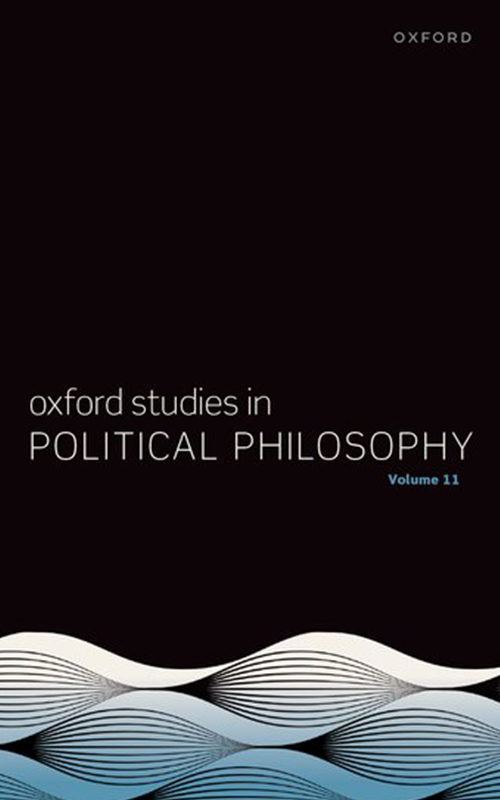
Editor of Oxford Studies in Political Philosophy
Editor of Cambridge Elements in Political Philosophy
Presentations
“Communities of Judgment, Free Expression, and Content-Neutrality,” Conference on Academic Freedom, Sept 2025
“Impersonal Paternalism,” USC Law and Philosophy Workshop, Oct 2024
“Natural Aristocracy and the Rejection of Political Equality,” OSPP Glasgow, Dec 2024 and King’s College London, Mar 2025
“Autonomy, Reason and Preference,” International Association for Philosophy of Law and Social Philosophy, Jul 2024
The Freedom Connection
Wall studies moral pluralism, autonomy, and the role of institutions in promoting good human lives. His work contributes to freedom by clarifying how societies can respect diverse moral views while fostering individual and collective self-determination.
Professor of Philosophy
Kit Wellman
Political and Legal Philosophy, Ethics, Applied Ethics
Wellman's Research
Kit Wellman specializes in ethics, with a focus on political and legal philosophy, and his work addresses foundational topics such as political legitimacy, immigration, punishment, secession, and the duty to obey the law.
Wellman argues that only a rights-based analysis can satisfactorily explain the permissibility of punishment. On Wellman’s view, punishment is permissible just in case the wrongdoer has forfeited their rights against punishment by culpably violating (or at least attempting to violate) the rights of others. He discusses these concepts in his book Rights Forfeiture and Punishment (2017).
Building on this framework, his new project investigates how rights forfeiture applies to both punishment and also to defensive force. This raises questions about when individuals may be justly harmed to prevent greater wrongs and whether prior harms affect the permissibility of later penalties.
In his work, Wellman hopes to clarify the moral boundaries of legal authority, personal accountability, and the rights we retain or relinquish in moments of conflict.
Recent Accomplishments
New Book
Rights and Resistance (Oxford University Press, 2025).
Journal Publications
“Toward a Permissive Theory of Revolution” in Rights and Resistance (Oxford University Press, 2025), pp. 165-183.
“American Nullification and Secession” in Rights and Resistance (Oxford University Press, 2025), pp. 142-164.
“Occupancy Rights and the Right of Return” in Rights and Resistance (Oxford University Press, 2025), pp. 86-104.
“May We Recruit Prisoners?” in Rights and Resistance (Oxford University Press, 2025), pp. 77-85.
“The Right to Exclude” in Rights and Resistance (Oxford University Press, 2025), 65-76.
“Thomson on Agent-Relative Prerogatives” in Rights and Resistance (Oxford University Press, 2025), pp. 45-64.
“When May We Stand Our Ground?” in Rights and Resistance (Oxford University Press, 2025), pp. 26-44.
“The Right to Resist” forthcoming in Rights and Resistance (Oxford University Press, 2025), pp. 9-25.
“Natural Duty Theories,” co-authored with William Bell in The Oxford Handbook of Political Obligation, ed. George Klosko (Oxford University Press, 2025).
“The Rights Forfeiture Theory of Punishment,” co-authored with William Bell in The Oxford Handbook of the Philosophy of Punishment, ed. J. Ryberg (Oxford University Press, 2025), pp 113-126.
“Intelligence and Immigration,” Journal of Controversial Ideas 4(2), 14, 2024.
“Hate Crime Legislation as an Antidote to Hate Ideology,” Social Philosophy & Policy, 41 (1): 256-273, 2024.
The Freedom Connection
Wellman’s research deepens our understanding of how rights can be retained, limited, or forfeited in contexts of punishment and defensive force. By clarifying when it is just to restrict or override individual rights, his work helps safeguard the principles of accountability and ensures that the protection of freedom remains grounded in moral legitimacy.
Research Highlights
Freedom Center core faculty are at the forefront of academic inquiry and research into freedom in all its forms. These are a few highlights of their efforts!
Freedom Dialogues Launch

In the News

Normativity, Law, and Well-Being: A Q&A with Connie Rosati
Freedom Center Visiting Fellow Roy Allison Vaughan Centennial Professor in Philosophy and Professor of Law…

The Freedom Dialogues Videos Launch with Inquiry into the Political Office Gender-Ambition Gap
The Center for the Philosophy of Freedom has launched The Freedom Dialogues, a new video…


Freedom Center Supported Journals
Click on a Journal to learn more about it and how the Freedom Center Faculty support it.


Upcoming Conferences & Workshops
0 events found.
